
Do Good, Do Well | Routing marketing budgets into ocean technology
 Sebastian FarrellMarketing Associate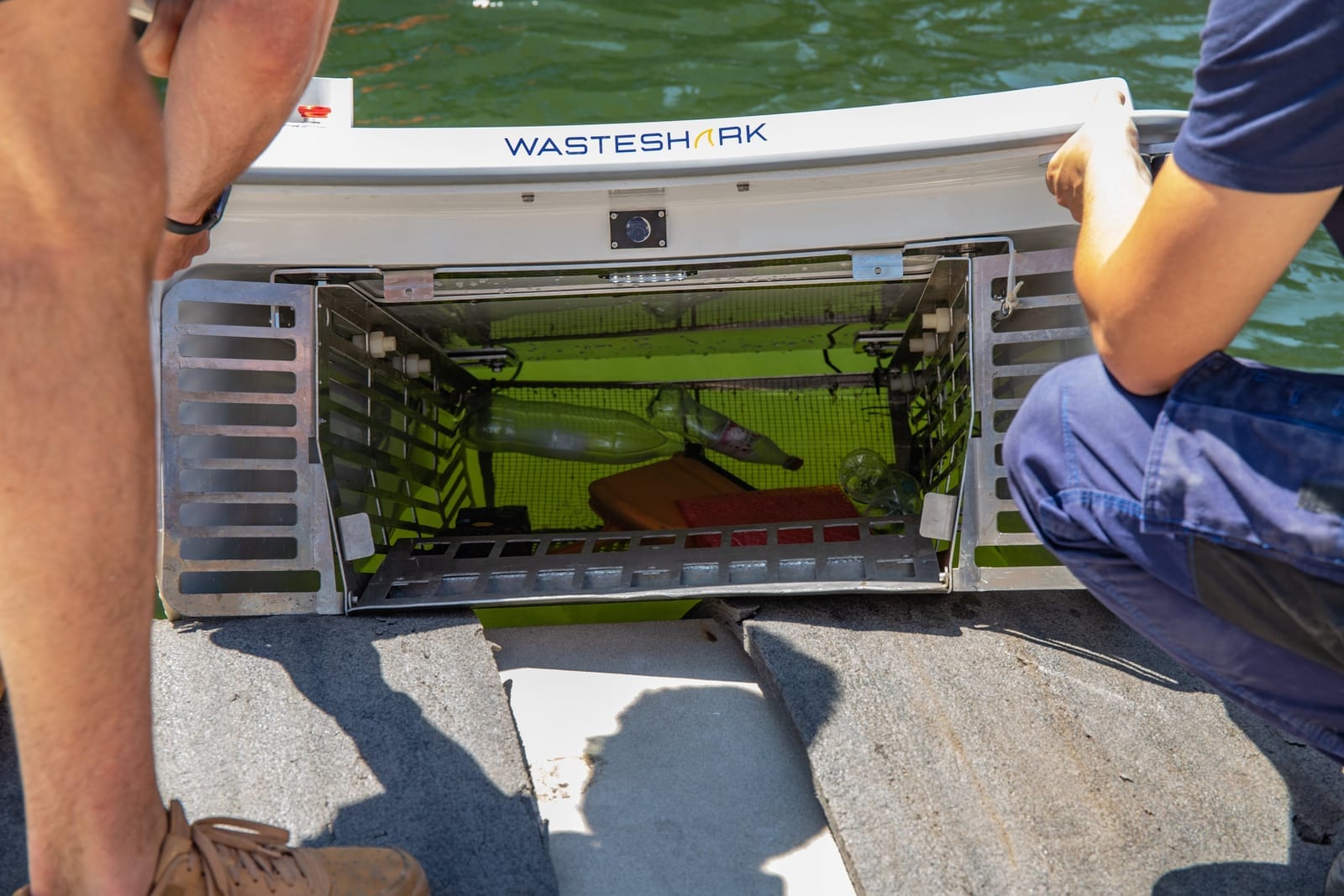
The five-year global total invested in ocean health is worth less than four days of the world’s advertising budget. That is not a gap in conviction. It is a gap in plumbing.
Executive summary
Global advertising spend passes one trillion dollars in 2026. Ocean health, the least funded of the seventeen Sustainable Development Goals, received under ten billion dollars in total across the five years to 2019. That is less than four days of the world’s advertising budget.
The shortfall in ocean finance is not a morality problem. It is a routing problem. The money exists. It sits in the wrong account, and it is currently buying impressions that nobody trusts.
Four things follow:
- From 27 September 2026, EU law bans generic green claims and offset-based neutrality labels. The sustainability marketing playbook most brands are running becomes illegal across 27 markets, more or less overnight.
- What survives that rule change is specific, substantiated, verifiable claims about a named thing in a named place. Sponsored deployments of blue technology produce exactly that, as a by-product of doing the work.
- Consumers say they want sustainable brands and then do not pay a premium for them. So stop pricing sustainability into the product. Fund it from the marketing line and take the proof back in verified outcomes and earned media.
- We measure this with ROII, Return on Investment and Impact: one spend, two ledgers, both audited.
The Salamander Co. builds and runs these deployments. This paper sets out the model, the evidence, the numbers, and the ways it fails.
1. The mismatch
The blue economy is the set of industries and innovations tied to oceans and coasts. It is routinely described as a multi-trillion-dollar opportunity. It is funded like a rounding error.
Blue-economy ventures attract roughly seven percent of climate-tech capital. Meeting SDG 14, Life Below Water, needs about 175 billion dollars a year. Between 2015 and 2019, under ten billion dollars was invested in total. The UN’s own framing is that the ocean needs roughly one hundred times more investment than it currently gets, and that SDG 14 receives less than one percent of total SDG finance.
Now put that next to the other number. Dentsu forecasts global advertising spend above one trillion dollars in 2026, growing faster than the global economy. Eighty-six percent of chief marketing officers expect their budgets to rise.
So the five-year total invested in ocean health is worth less than four days of global advertising.
That is not a gap in conviction. It is a gap in plumbing. There is no shortage of capital that wants to be associated with ocean recovery. There is a shortage of instruments that let a marketing director buy it, book it, and defend it in a quarterly review.
2. The rule change that just broke green marketing
On 27 September 2026, Directive (EU) 2024/825, the Empowering Consumers for the Green Transition Directive, becomes enforceable across all 27 EU member states. There is no transition period and no exemption for small businesses.
What it bans:
- Generic environmental claims such as “eco-friendly,” “green” or “sustainable” without proof of excellent environmental performance.
- Offset-based neutrality claims. “Carbon neutral” built on purchased credits is now a blacklisted commercial practice.
- Self-created and self-certified sustainability labels that do not sit inside a recognized, independently verified certification scheme.
- Whole-business claims that only describe one part of the business.
Read that list again as a marketer. It describes most corporate sustainability communication produced in the last decade. The UK, through the CMA’s Green Claims Code, and a growing set of regulators elsewhere are moving the same way.
What survives is narrow and specific: a substantiated claim about one clearly named aspect, backed by a document you can produce when asked.
This is the part most brands have not internalized yet. The compliance burden is not a communications problem to be solved by cautious wording. It is a sourcing problem. If your claims have to be specific and evidenced, you need to own activity that generates specific evidence.
A sponsored deployment does. “We funded the vessel that removed 4,000 liters of debris from this river over twelve months, and here is the geotagged log” is not a green claim in the banned sense. It is a description of a thing that happened, with a timestamp on it.
The sponsored deployment model is the compliant replacement for the campaign you can no longer run.
3. Stop selling the premium, start funding the proof
The standard case for cause marketing leans on consumer survey data. Large majorities say they want brands to act on the environment. Those numbers are real and they are also close to useless on their own, because stated preference and checkout behavior diverge badly.
Kantar’s Sustainability Sector Index found 98 percent of people in Asia-Pacific wanted to live more sustainably, while 17 percent were actually changing their behavior. Bain surveyed more than 23,000 consumers and found willingness to pay an average premium of 12 percent for lower-impact products, against an average premium of 28 percent actually charged. When asked to identify which of two products carried higher emissions, consumers got it wrong about three quarters of the time.
The honest read: consumers are not going to fund the transition at the till, and they cannot reliably tell who deserves their money anyway.
That is an argument against building sustainability into the price of a product. It is not an argument against investing in it. It relocates the spend. Rather than trying to recover a green premium from a customer who will not pay it, fund the activity from the marketing budget, where the return is measured in attention, trust, retention and defensible claims rather than unit margin.
Marketing directors already buy things that cannot be attributed to a single sale: stadium naming rights, sponsorships, out-of-home, brand campaigns. A sponsored deployment sits in that category, with one advantage over all of them. It leaves behind a physical asset doing verifiable work in public.
4. Why the blue economy stays underfunded
Three reasons, and none of them are solved by more enthusiasm.
Perceived risk and thin exit history. Blue-tech ventures operate against living ecosystems and slow-moving regulation. Funds price that as riskier than software, and point to the short list of significant exits. Fair, as far as it goes.
Deployment economics. Solutions have to survive local conditions, from port logistics in Lagos to harbor operations in New York. That demands patient capital and proof points, which are expensive to generate and rarely funded by anyone.
Awareness. Most corporate sponsors and a good share of investors cannot name three blue-tech companies. This is a storytelling failure before it is a capital failure.
In emerging markets the pressure is sharper. Coastal infrastructure is thinner, and small-scale fishers face a daily choice between income now and sustainability later. Public money and philanthropy will not close this. Private capital will, if it is given a reason that survives a budget meeting.
Sponsorship budgets are the most under-considered pool of capital in the blue economy. They are large, annual, renewable, and they are spent on exactly the thing blue tech lacks: attention.
5. The sponsored deployment model
TSC has been running this model with RanMarine Technology and partners. Four parties, one loop.
Innovators supply the technology. RanMarine’s zero-emission autonomous surface vessels, the WasteShark family, remove floating waste, plastics and biomass while collecting water-quality data. Ocean Plastic Technologies contributes Micro Recycling Pods that sort and process collected material into local circular streams, so the waste has somewhere to go.
Sponsors fund the deployment. Municipalities, port operators, developers and brands pay for a vessel or a fleet, in exchange for co-branding, exclusivity in a defined area, and the data the unit produces.
Local partners operate and train. Community operators run the day to day and receive workforce training. This is where the socio-economic outcomes come from, and it is not optional. A deployment run by a visiting contractor is a photo opportunity, not a program.
Data is shared. Volume and type of waste, geotagged water-quality readings, hours operated, area patrolled, jobs supported. Published on an agreed cadence, in a form that survives scrutiny.
That last point is what turns a sponsorship into an asset. Under the new claims regime, the data is not the reporting overhead. It is the product.
5.1 Choosing the technology partner
Sponsors carry reputational risk that the technology provider creates. Selecting a credible, commercially established supplier with deployments already running in multiple markets reduces implementation risk and raises the odds that the reported outcomes hold up under challenge.
The test is boring and it matters: is the equipment in the water somewhere else, today, with someone willing to talk about it. Everything else is a pitch deck.
6. ROII, defined properly
We introduced ROII, Return on Investment and Impact, to describe what a sponsored deployment returns. The concept is sound. The version we first published expressed it as a single fraction that added financial return to environmental impact over investment.
That formula does not work, and we are correcting it here. You cannot add dollars to kilograms and divide the result by dollars. Any finance director will kill that on sight, and they should. Single-number impact metrics are how greenwashing gets a spreadsheet.
ROII is better understood as one investment reported through two ledgers, each in its own units:
Commercial return = media and brand value delivered ÷ investment
Expressed as a multiple, benchmarked against what the same money buys in paid media.
Impact return = verified outcome units ÷ investment
Expressed as cost per unit: cost per kilogram of waste intercepted, per kilometer of waterway patrolled, per operator trained, per month of continuous water-quality data.
Both sides are audited. Neither is allowed to launder the other. A sponsorship with strong media numbers and weak outcome data is an ad, and should be priced as one. A sponsorship with strong outcomes and no visibility is philanthropy, which is a legitimate choice but a different budget line.
What to track:
| Ledger | Metric | Source |
|---|---|---|
| Impact | Volume and composition of debris removed | Onboard logs, operator reports |
| Impact | Waterway distance or area patrolled | GPS track data |
| Impact | Share of material routed into circular streams | Recycling partner records |
| Impact | Water-quality time series | Onboard sensors |
| Social | Operators employed, hours of training delivered | Local partner records |
| Commercial | Earned media reach and quality of placement | Media monitoring |
| Commercial | Social engagement and sentiment | Platform analytics |
| Commercial | Brand association and consideration lift | Pre and post survey |
| Commercial | Employee participation and retention signals | Internal HR data |
| Financial | Cost per outcome unit vs equivalent paid media cost | Combined |
The benchmark question a marketing director should ask is simple. For the cost of one quarter of regional out-of-home, what physical work gets done, how many people see it happen, and what can I legally say about it next year.
7. Evidence
7.1 Citi Bike: the long version of the argument
In 2013 New York launched bike share with private money. Citi and MasterCard financed it, contributing roughly 41 million dollars over five years for 10,000 branded bicycles and 600 stations, with no public funding required. Bikes and docks were painted Citi blue and the program carried the bank’s name.
The marketing logic was sharp. Because the bikes are human-powered, the program sat outside city rules on advertising on transportation vehicles. Analysts priced the visibility at around 2.20 dollars per bicycle per day, which made it one of the cheapest outdoor advertising placements in New York.
The number that matters is not the 41 million. It is the renewal. In 2023, Citi extended its title sponsorship for a further ten years, through 2034. A bank with a full marketing department, twenty years of data and no sentimentality about media spend chose to keep buying it. That is the strongest available evidence that infrastructure sponsorship works as marketing, because it is revealed preference rather than a survey response.
The honest caveats. A November 2025 report from the New York City Independent Budget Office examined the program’s economics and found the arrangement has not delivered everything the city expected, including sponsorship revenue share coming in well below projections, and it opened a live debate about public subsidy ahead of the operator contract expiring in 2029. Sponsorship is not a substitute for a funding model. It is a layer on top of one.
7.2 Leeds WasteShark: small money, renewed
In 2024 the Leeds Waterfront Group put a WasteShark into the River Aire and the Leeds and Liverpool Canal, operated by social enterprise Canal Connections with Biffa, and the first such deployment approved by the Canal & River Trust on its waterways.
First-year results: more than 4,000 liters of organic matter, plastics and debris removed, across 18.5 kilometers of actively patrolled waterway.
Then the initial funding ran out. Instead of quietly ending, the group ran a crowdfunding campaign with match funding from local businesses. More than 400 public donations and twelve corporate sponsors raised over £45,000, which kept the vessel running and added an extra cleaning day each week. Sponsors included Dedalus, Vastint UK, Canal & River Trust, Mustard Wharf, Royal Armouries, Stericycle, Tetra Tech, Redmayne Bentley, CPW and Bowmer and Kirkland.
Paul Ellison, Chair of the Leeds Waterfront Group, said the group was taken aback by the response, and that the WasteShark’s local distinctiveness was part of why people backed it.
Two things to take from Leeds. First, the entry price is low. A year of visible, data-generating environmental work in a major city cost less than a single regional media flight. Second, and more useful, sponsors have stayed. CPW publicly confirmed continued sponsorship into 2026. Renewal is the only impact metric that cannot be gamed.
7.3 Aqua Libra at Canary Wharf: the brand version
In March 2023 TSC helped bring London’s first WasteShark to Middle Dock, with Aqua Libra and Canary Wharf Group. The unit is battery powered, runs without noise, light or emissions, and collects water-quality data while it patrols.
We guided the project from concept to launch and built it around a claim Aqua Libra could actually make, on reducing single-use plastic. Coverage followed across trade and smart-city press, and the deployment picked up cultural attention on its own, including a New Yorker cartoon casting the WasteShark as a trash-eating sea monster.
One discipline point, given section 2. Some widely republished figures from that launch, including a daily bottle-equivalent number, came from press materials rather than audited operating logs. In a paper arguing for verifiable claims we are not going to repeat them as fact. Under the 2026 rules we would now structure that same campaign to report measured output from the unit itself. That is the change the regulation forces, and it makes the case stronger rather than weaker.
7.4 What the three have in common
Physical, public, and local. Each sponsorship attached a brand to a visible object doing understandable work in a place people recognize. None of them required the audience to trust a claim about a supply chain they cannot see.
8. Where this model fails
Any white paper that does not include this section is selling something.
Sponsor churn. A program funded by one sponsor dies when that sponsor reallocates. Minneapolis lost its twelve-year-old bike share overnight when its local sponsor withdrew. Fix: multi-sponsor structures, staggered terms, and a community funding base, which is precisely what Leeds built.
Greenwashing exposure. After 27 September, a sponsorship marketed beyond its evidence is a regulatory liability, not just a reputational one. Fix: claim only what the logs support, publish method alongside results, and never let the creative outrun the data.
Attribution. Brand lift from a sponsorship is hard to isolate. Fix: agree the measurement design before launch, run pre and post brand tracking, and accept a directional read rather than inventing precision.
Tokenism and local backlash. A drone in a harbor does not fix a waste management system, and a community that has been asking for bins for five years will notice. Fix: fund the local operator, pay for training, and be explicit about what the deployment does and does not solve.
The honest limit. Autonomous surface vessels intercept waste at source in contained waterways. They do not clean the ocean. Roughly 21 million metric tons of plastic leaked into the environment globally in 2022, and leakage into aquatic systems is projected to rise sharply without intervention. Interception is one intervention among many, and its second function, making an invisible problem visible and locally owned, may matter as much as its first.
9. How to run one
For brands and sponsors. Pick an issue with a genuine line to your business, not one that merely tests well. Work with providers who have equipment running elsewhere today. Agree scope, branding, data rights and reporting cadence before signing, and bring the local community in early. Budget it as a multi-year line, not a campaign burst. Publish the problems alongside the results, because a deployment that reports a bad month is far more credible than one that never does.
For blue-tech innovators. Be deployment-ready in real conditions, not lab-ready. Build tiered sponsorship packages with costs, expected outcome ranges and reporting commitments written down. Build the data infrastructure first, because dashboards are now part of what the sponsor is buying. Recruit and train locally. Get investor-ready on governance and business planning early, and use sponsorship revenue to scale without giving away equity at the worst possible moment.
For investors. Consider blended structures where equity sits alongside sponsored-deployment revenue, which de-risks the venture and shortens the path to proof. Factor brand and stakeholder value into the case. Prioritize companies with a credible route to multiple markets, because a model that only works in one harbor is a project, not a company.
10. Where TSC comes in
We sit between the two sides of this gap. On one side, innovators with technology in the water and no marketing budget. On the other, brands with marketing budgets and, as of this month, a compliance problem and a credibility problem.
TSC designs the deployment, brings the partners together, runs the campaign around it, and builds the measurement so both ledgers hold up. We also invest small amounts early, because we would rather have skin in the thing we are recommending.
The ocean covers more than 70 percent of the planet and receives less than one percent of SDG finance. Whales were anonymous animals until someone gave them names and stories. Ocean technology is at the same point now: the work is real, the people are good, and almost nobody outside the sector can picture any of it.
If you are running a marketing budget and rewriting your claims before 27 September, or building in blue tech and tired of pitching to funds that do not understand the water, get in touch. We will tell you plainly whether this model fits what you are trying to do.
Sebastian Farrell, Marketing Associate, The Salamander Co.
sebastian@thesalamander-co.com
References
Bain & Company (2023) Consumer sustainability survey findings, reported in ESG Today, 14 November. https://www.esgtoday.com/consumers-willing-to-pay-12-premium-for-sustainable-products-bain-survey/
Citigroup (2023) “Citi Bike at 10”, Citi Perspectives, 30 May. https://www.citigroup.com/global/news/perspectives/2023/citi-bike-at-10
CPW (2026) “CPW Continues Support for WasteShark Leeds to Tackle Water Pollution”. https://www.cpwp.com/news/cpw-continues-support-for-wasteshark-leeds-to-tackle-water-pollution
Dedalus UK & Ireland (2025) “Leeds WasteShark Initiative Secured with Support from Dedalus and Local Businesses”. https://www.dedalus.com/uki/media/news/dedalus-supports-leeds-environmental-initiative/
dentsu (2025) Global Ad Spend Forecasts, 3 December. https://www.dentsu.com/news-releases/global-ad-spend-set-to-surpass-one-trillion-for-the-first-time-in-2026-as-the-algorithmic-era-redefines-growth
European Parliament and Council (2024) Directive (EU) 2024/825 on empowering consumers for the green transition, 28 February. Transposed by 27 March 2026, applicable from 27 September 2026.
Janulis, H. and Keller, R. (2025) “Unlocking Climate Tech Capital for Blue Economy Ventures”, Investable Oceans, 7 January. https://www.investableoceans.com/blue-brief/unlocking-climate-tech-capital-for-blue-economy-ventures
Kantar (2023) Sustainability Sector Index. https://www.kantar.com/inspiration/sustainability/the-great-sustainability-debate-in-apac
New York City Independent Budget Office (2025) Citi Bike: Lessons for the Future of New York City’s Bike Share, November.
OECD (2023) Towards Eliminating Plastic Pollution by 2040: A Policy Scenario Analysis, 11 November.
Pilcher, J. (2012) “Why Citi’s Bike Campaign Is a Financial Marketing Success”, The Financial Brand, 21 May. https://thefinancialbrand.com/news/bank-culture/citi-bikes-24156/
RanMarine Technology (2025) Leeds Waterfront Group case study. https://www.ranmarine.io/success_story/leeds-waterfront-group/
UNCTAD (2025) Statement to the 5th United Nations Ocean Forum on trade-related aspects of SDG 14, March.
UNOPS (2025) Mobilizing finance for ocean actions in support of SDG 14, statement by Jorge Moreira da Silva, UN Ocean Conference, 10 June.
All sources accessed 17 September 2026.